Oraimo Wireless Headphones
What Are Oraimo Wireless Headphones?
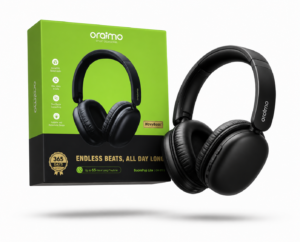
Oraimo wirelees headphones is a consumer electronics brand that got its start making affordable mobile accessories — power banks, cables, and chargers — before expanding into wireless audio. Its headphone lineup now spans three main categories: over-ear headphones (the BoomPop series), true wireless earbuds (the FreePods and SpaceBuds lines), and neckband-style headphones (the Necklace series), along with newer open-ear designs. The brand has built its reputation in emerging markets by offering Bluetooth audio at a fraction of the price of Sony, Bose, or Apple, without asking buyers to give up basics like long battery life or a comfortable fit.
Every current Oraimo headphone connects over Bluetooth, so there’s no headphone jack required. Most models add a companion feature set — things like an equalizer, low-latency gaming mode, or app-based controls — that used to be reserved for pricier headphones a few years ago.
The Oraimo Headphone Lineup: Latest Models
Oraimo refreshes its lineup often, so exact model names and specs shift from year to year. The current families look roughly like this:
Over-Ear (BoomPop series)
- BoomPop Pro — the flagship over-ear model, positioned around hybrid ANC, larger drivers, and app-based EQ control.
- BoomPop N and BoomPop 2 / 2S — mid-range over-ear headphones focused on long playtime and heavy bass tuning.
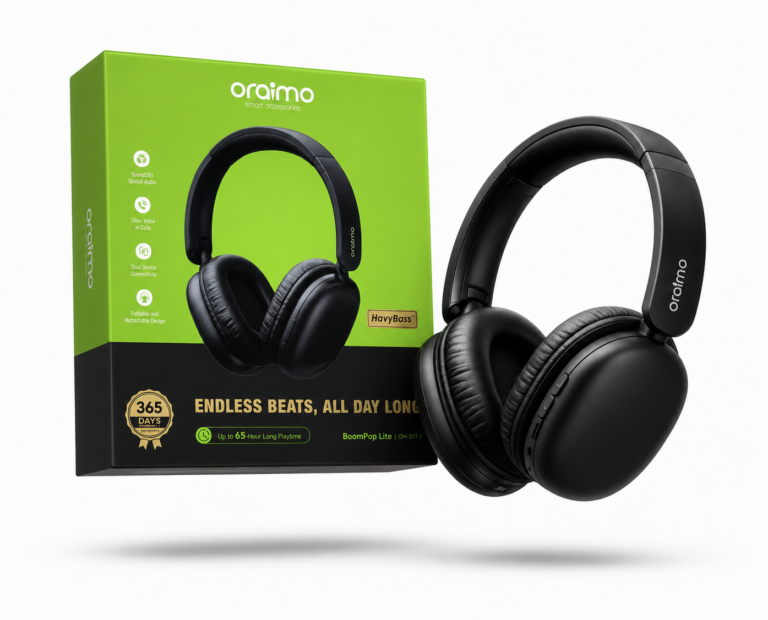
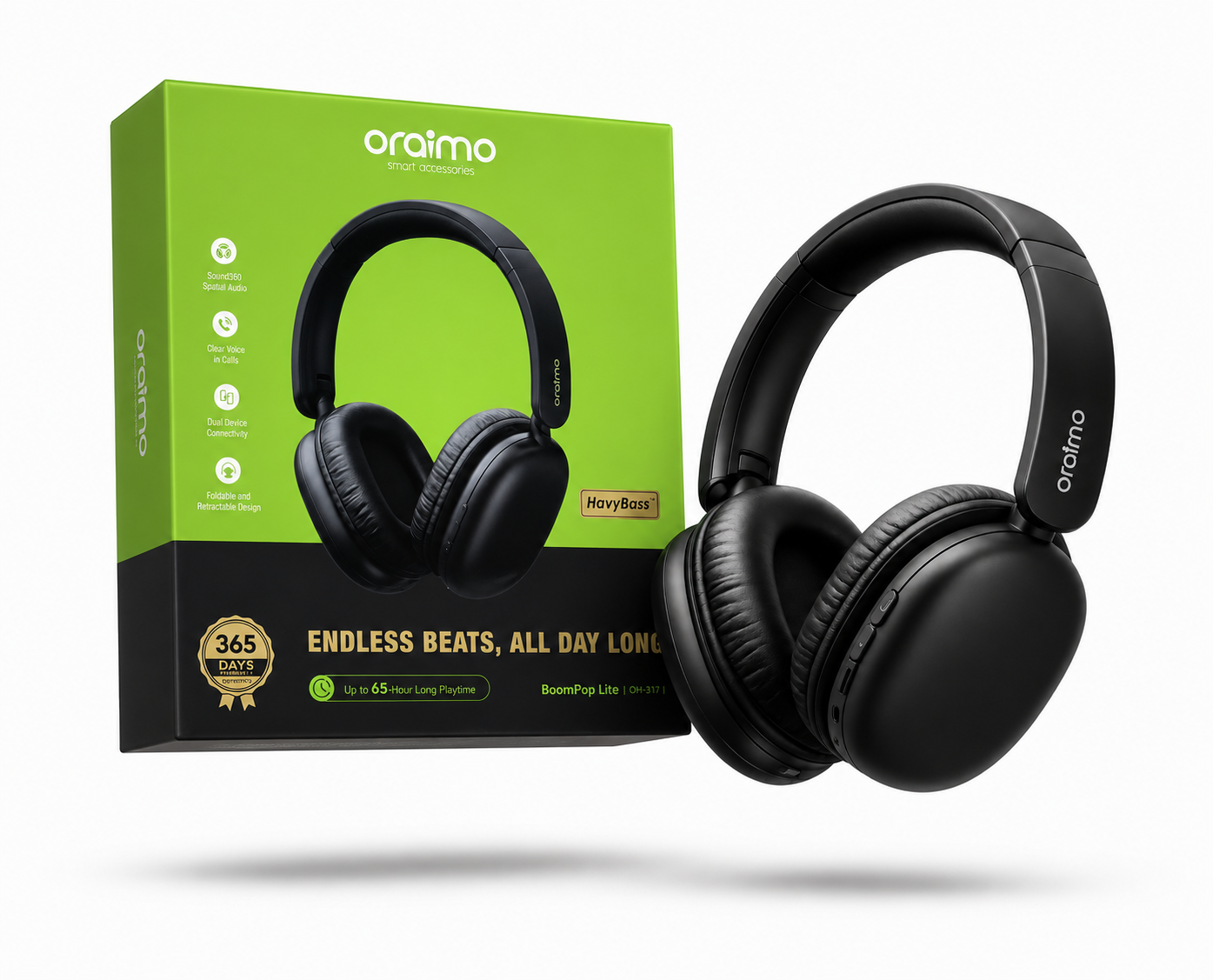
- BoomPop Lite and BoomPop Air — entry-level over-ear options that trim features like ANC to hit a lower price point.
Expert tip: Model names get reused and revised often. Before buying, check the exact listing for Bluetooth version, driver size, and battery figures rather than assuming a “Pro” or numbered suffix automatically means newer specs — cross-check the product page or manual.
Sound Quality & Bass Performance
Oraimo tunes most of its headphones toward a bass-forward sound signature — a common choice for budget audio brands because boosted low end tends to feel more impressive to casual listeners than a flat, reference tuning. Over-ear models in the BoomPop line typically use 40mm+ drivers, which is large enough to produce noticeably punchy bass on hip-hop, EDM, and pop tracks. Mids are usually a step behind, and treble detail is where you’ll notice the biggest gap compared to higher-end headphones — cymbals and vocal sibilance can sound slightly rolled off rather than crisp.
Earbuds like FreePods and SpaceBuds use smaller drivers (commonly in the 10–13mm range) but still lean into a heavier bass curve. Codec support is generally limited to SBC and AAC rather than higher-bitrate codecs like aptX or LDAC, which matters mainly if you’re comparing detail on very high-quality source files — for everyday streaming from Spotify or YouTube Music, most listeners won’t notice the difference.
Models with app support often include EQ presets (bass boost, vocal, balanced) that let you tune the sound to taste, which helps offset the factory tuning if you find it too bass-heavy out of the box.
Oraimo headphones favor punchy, bass-forward sound over flat, reference-accurate tuning. They’re enjoyable for casual listening and bass-heavy genres, but audiophiles who want detailed mids and treble should look elsewhere or use the EQ app if the model supports it.
Battery Life & Charging Speed
Battery life is one of Oraimo’s strongest selling points. Over-ear models frequently advertise around 60–65 hours of playback with ANC switched off, dropping to a shorter figure when ANC is active. True wireless earbuds can’t match that in a single charge because of their smaller cells, but the charging case usually brings total playtime into the 30–40 hour range across multiple charges.
Fast charging is a common feature across the lineup — many models advertise roughly 10 minutes of charging for a few hours of extra playback, which is genuinely useful if you forget to charge overnight. Charging is almost universally USB-C on current-generation models, which is faster and more convenient than the older micro-USB standard still found on some older or budget units.
| Category | Typical Single-Charge Playtime | Fast Charge | Charging Port |
|---|---|---|---|
| Over-ear (BoomPop series) | ~40–65 hours (ANC off) | ~10 min charge = several hours playback | USB-C |
| True wireless earbuds (FreePods, SpaceBuds) | ~4–8 hours per charge, 30–40 hours with case | ~5–10 min charge = ~40–60 min playback | USB-C |
| Neckband (Necklace series) | ~15–25 hours | Varies by model | USB-C or micro-USB (older models) |
Figures above are typical ranges based on manufacturer product listings and vary by exact model and firmware. Always confirm the specific playtime on the listing for the unit you’re buying.
Bluetooth Version & Connectivity
Current-generation Oraimo headphones generally ship with Bluetooth 5.2, 5.3, or 5.4, which brings meaningful improvements over older 4.x/5.0 chipsets: lower power draw, more stable connections, and better range (commonly rated around 10 meters / roughly 100 feet in open space). Multi-device pairing — the ability to jump between, say, your laptop and phone without manually re-pairing — is increasingly common on app-enabled models, though it isn’t universal across the entire catalog, so check the spec sheet if that feature matters to you.
Comfort & Build Quality
Over-ear BoomPop models typically use memory-foam or protein-leather ear cushions with an adjustable, sometimes 360°-rotating headband, aimed at reducing clamping pressure during long sessions. Many fold flat or rotate for travel. Build materials lean toward matte plastics rather than metal, which keeps weight and cost down but means they won’t feel as premium in hand as headphones from higher-tier brands.
Earbuds come with multiple ear tip sizes (commonly S/M/L) and, on some FreePods models, a choice between an in-ear seal and a half-in-ear open fit, letting you pick comfort versus isolation based on preference. IP-rated water and sweat resistance shows up on select sport-oriented models, which is worth checking specifically if you plan to use them for workouts.
Comfort strengths
- Lightweight plastics keep long sessions manageable
- Cushioned pads and multiple ear tip sizes
- Foldable/travel-friendly designs on over-ear models
Comfort trade-offs
- Plastic-heavy build feels less premium than metal-framed rivals
- Clamping force can feel tight on larger head sizes for some models
- Not all models have adjustable headbands
Active Noise Cancellation (ANC), ENC & Noise Handling
Not every Oraimo headphone has active noise cancellation, so this is a spec worth double-checking before you buy. ANC-equipped models — like certain BoomPop Pro units and SpaceBuds ANC — use microphones to detect and cancel ambient sound, with manufacturer claims in the range of blocking a majority of low-frequency noise such as airplane hum, HVAC systems, or traffic. Results in real-world use are generally solid for the price but won’t match dedicated ANC flagships from Sony or Bose in depth or transparency-mode polish.
ENC (Environmental Noise Cancellation) is more widely available across the lineup and works differently: rather than blocking sound from reaching your ears, ENC uses multiple microphones to strip background noise out of your voice during calls, so the person on the other end hears you more clearly in noisy environments.
Several Oraimo models include a dedicated low-latency “Game Mode,” usually toggled through a button combo or the companion app, which shortens the audio delay between what’s happening on screen and what you hear — important for anything timing-sensitive, like shooters or rhythm games. Outside of Game Mode, standard Bluetooth audio can introduce noticeable lag on video and games, so it’s worth confirming a model has this feature specifically if gaming is a priority.
Microphone Quality & Call Performance
Mic quality has improved noticeably across recent Oraimo releases, largely thanks to multi-mic ENC setups (some earbuds use up to four microphones total across both earpieces). For everyday calls — voice notes, video meetings, phone calls in a reasonably quiet room — clarity is generally good. In loud environments like busy streets or crowded offices, expect some compression of voice quality as the noise reduction algorithm works harder, which is typical of budget ENC systems generally, not unique to Oraimo.
Controls & App Support
Control schemes vary by model: touch panels on most earbuds and higher-end over-ear headphones, and physical buttons on simpler or sport-focused models (a deliberate choice, since buttons tend to work more reliably than touch surfaces when hands are sweaty or wet). App-enabled models let you switch between ANC, transparency, and normal modes, adjust EQ, remap touch gestures, and in some cases enable multi-device pairing — features that used to be exclusive to premium headphones.
Device Compatibility
Because Oraimo headphones use standard Bluetooth protocols rather than a proprietary connection, they work across virtually any Bluetooth-capable device:
- Android: Full compatibility, including voice assistant access (Google Assistant) on most models.
- iPhone: Pairs and functions normally; Siri access works through standard Bluetooth controls, though some app features may be Android-first.
- Windows & Mac: Pairs as a standard Bluetooth audio device for calls and media playback.
- Smart TVs: Works with TVs that support Bluetooth audio output; older TVs without Bluetooth will need a separate transmitter.
Warranty & Durability
Warranty coverage on Oraimo products typically runs for a limited period (commonly around 12 months from purchase in most regions, though terms vary by country and retailer), covering manufacturing defects rather than accidental damage like drops or water exposure beyond a model’s rated IP resistance. Because Oraimo sells heavily through third-party marketplaces as well as its own regional storefronts, it’s worth buying from an authorized retailer or the official Oraimo site to make sure the warranty is honored.
Who Should Buy Oraimo Wireless Headphones?
Oraimo headphones make the most sense for people who want reliable, long-lasting wireless audio without paying premium-brand prices — students, commuters, remote workers on calls all day, casual gym-goers, and anyone replacing a lost or broken pair without wanting to spend heavily again. They’re a reasonable everyday upgrade over wired earbuds or a phone’s built-in speaker.
They’re a weaker fit for critical listeners who care deeply about audio accuracy, professionals who need studio-reference sound for mixing or mastering, or anyone who specifically wants flagship-level ANC comparable to Sony’s or Bose’s top models.
Buying Guide: Price Range & Value for Money
Oraimo headphones generally span a wide but budget-friendly price range, with entry-level earbuds and neckbands at the low end and ANC-equipped over-ear or premium earbuds at the top of the range. Exact pricing depends heavily on your region and retailer, so treat the tiers below as a general guide rather than fixed numbers.
| Tier | What you typically get | Best for |
|---|---|---|
| Entry-level | Basic TWS earbuds or neckbands, no ANC, button controls | Backup pair, tight budget, casual use |
| Mid-range | Longer battery, ENC calling, sometimes app EQ, better build | Daily commuting, office calls, workouts |
| Upper-tier | ANC, app control, multi-device pairing, premium comfort features | Travel, open offices, noise-sensitive users |
In terms of value for money, Oraimo’s strongest case is battery life and price — few brands offer 60+ hour over-ear headphones or fast-charging earbuds at this price point. The trade-off is refinement: sound detail, app polish, and material quality step up meaningfully once you move into $100+ headphones from more established audio brands.
Common Buying Mistakes to Avoid
- Assuming every model has ANC. Many Oraimo headphones only include ENC for calls, not ANC for blocking playback noise — check the spec sheet, not just the marketing image.
- Ignoring Bluetooth version. Older models on Bluetooth 4.x or early 5.0 will have shorter range and less stable connections than 5.2+.
- Buying from unauthorized sellers. Grey-market units can complicate warranty claims if something goes wrong.
- Overlooking ear tip fit. A poor seal on in-ear models hurts both bass response and passive noise isolation — always try the included size options.
- Not checking codec support if you care about high-resolution streaming — most models top out at AAC/SBC, not higher-bitrate codecs.
Maintenance, Cleaning & Troubleshooting
Cleaning Guide
- Wipe ear cushions and earbud shells with a slightly damp microfiber cloth — avoid soaking, especially on non-waterproof models.
- Remove silicone ear tips periodically and rinse them separately with mild soap and water, then dry fully before reattaching.
- Clean charging contacts on earbuds and the case with a dry cotton swab to prevent charging issues from oxidation or debris buildup.
- Avoid alcohol-based cleaners on foam ear cushions, which can degrade the material over time.
Troubleshooting Common Issues
- Won’t pair: Reset the headphones (usually holding the power/multifunction button for several seconds until you hear a tone), then forget and re-pair the device in your phone’s Bluetooth settings.
- One earbud not working: Reset both earbuds in the case, ensure both are fully charged, and re-pair them together before connecting to your phone.
- Sudden battery drain: Update firmware if the companion app offers it, and check that auto-pause/ear-detection sensors aren’t stuck active in a pocket.
- Distorted sound: Lower source volume (Bluetooth audio can clip at max device volume), and check for firmware updates addressing codec bugs.
Alternatives to Consider
If Oraimo doesn’t fit your needs, other budget-to-midrange wireless headphone brands worth comparing include Anker Soundcore, JBL’s budget tier, Xiaomi/Redmi Buds, and Tranya, all of which compete in a similar price bracket with varying strengths in ANC, app support, or codec quality. For buyers willing to spend more, mid-tier options from Sony (WH-CH series) or Jabra offer a noticeable step up in sound refinement and ANC performance.
Comparison Tables
| Line | Form Factor | Typical Standout Feature | Typical Weak Point |
|---|---|---|---|
| BoomPop (Pro/N/2/2S/Lite/Air) | Over-ear | Long battery life, big bass, foldable design | ANC only on select models |
| FreePods | True wireless earbuds | Dual-fit design, fast charging, portability | Shorter single-charge playtime |
| SpaceBuds / SpaceBuds ANC | True wireless earbuds | ANC + app control + light effects | Higher price than base earbuds |
| Necklace series | Neckband | Long wear time, earpieces stay tethered | Bulkier, less pocketable |
| Open-ear (OpenSnap/OpenArc/OpenPods) | Open-ear clip-on | Situational awareness, no ear canal seal | Less bass and passive isolation |
| Feature | Over-ear (BoomPop) | TWS Earbuds | Neckband |
|---|---|---|---|
| ANC availability | Select models | Select models | Rare |
| ENC calling | Common | Common | Common |
| App/EQ control | On higher-tier models | On higher-tier models | Rare |
| Gaming/low-latency mode | Select models | Select models | Rare |
| Sweat/water resistance | Uncommon | Common on sport models | Common |
| Category | Single Charge | Total With Case (if applicable) |
|---|---|---|
| BoomPop over-ear | ~40–65 hrs | N/A (no case) |
| FreePods earbuds | ~4–6 hrs | ~30–36 hrs |
| SpaceBuds ANC earbuds | ~5–8 hrs | ~35–40 hrs |
| Necklace neckband | ~15–25 hrs | N/A (no case) |
| Model family | ANC? | ENC (call noise reduction)? |
|---|---|---|
| BoomPop Pro | Yes (select versions) | Yes |
| BoomPop N / 2 / 2S / Lite / Air | No (most versions) | Yes |
| SpaceBuds ANC | Yes | Yes |
| FreePods 3 | No | Yes |
| Necklace series | No | Yes (varies by model) |
| Brand | Typical Price Bracket | Strength | Weakness vs. Oraimo |
|---|---|---|---|
| Oraimo | Budget | Battery life, price, wide model range | — |
| Anker Soundcore | Budget–mid | Strong app ecosystem, consistent ANC quality | Often pricier than equivalent Oraimo models |
| JBL (budget tier) | Budget–mid | Brand recognition, signature bass tuning | Sometimes shorter battery life |
| Xiaomi/Redmi Buds | Budget | Competitive pricing, decent build | Regional availability varies |
| Sony WH-CH series | Mid-range | Superior sound refinement, mature ANC | Higher price point |
Pricing tiers and positioning are general market observations, not exact figures — always compare current listings for the specific models and regions you’re shopping in.
ASAAD GONDAL